
Reviewed · LOVćEN & CETINJE TOURS
Cetinje City Tour
History comes quickly in Cetinje. This short private walk introduces you to Montenegro’s former capital through its monastery, royal residences, museums, and main street. I like the compact route and the chance to see several important buildings without spending a full day on a large group excursion. I also like that an English-speaking licensed guide gives the town context that is easy to miss on your own. The main drawback is the price: at $115.50 per person for about an hour, it makes the most sense for a small group sharing the cost, especially since entrance fees and transport from your accommodation are extra.
Cetinje is small, but it is not short on stories. The town was founded in the 15th century and later became the center of Montenegrin political and cultural life. You will walk beneath Mount Lovćen, past former embassies, royal buildings, churches, and leafy promenades. Keep your expectations practical, though. Some parts of town look worn, rain can take the shine off the walk, and a one-hour visit gives you an introduction rather than a full museum day.
In This Review
- Key points to know before booking
- Why Cetinje deserves a stop from Budva
- Starting at Cetinje Monastery and Ćipuri Church
- Biljarda, the 10-minute window into Njegoš’s life
- King Nikola’s Museum and the royal setting
- The final walk through Cetinje’s civic center
- What one hour can and cannot cover
- The real cost at $115.50 per person
- Weather, walking, and the town’s rough edges
- Who will get the most from this tour
- Should you book the Cetinje City Tour?
- FAQ
- Where does the Cetinje City Tour start?
- How long does the tour last?
- Is transportation from Budva included?
- Is the tour private?
- Is an English-speaking guide included?
- Are entrance fees included?
- What happens if bad weather cancels the tour?
Key points to know before booking
- The route covers Cetinje Monastery, Ćipuri Church, Biljarda, King Nikola’s Museum, and the central civic sights.
- The tour is private, so only your own group takes part.
- The guide speaks English and is licensed, with Filip named as one guide associated with the experience.
- The listed price is $115.50 per person, with group discounts available, but transport and museum admissions are not included.
- The town is compact, and the planned walk takes about one hour, making this an easy add-on to a Montenegro itinerary.
- Monastery etiquette matters, and the palace may restrict indoor photography.
Why Cetinje deserves a stop from Budva
Budva is Montenegro’s best-known coastal base, but Cetinje gives you a very different view of the country. Instead of seaside promenades and resort energy, you get the former royal capital, set in a mountain valley beneath Lovćen.
Cetinje was founded in the 15th century and served as Montenegro’s capital during the era of the Petrović-Njegoš dynasty. When King Nikola ruled, foreign embassies opened here, giving the town an unusually international appearance for such a small place. Those diplomatic buildings help explain why Cetinje feels more important than its size suggests.
I like the town’s scale. The central sights are close together, so you can move from a church to a royal residence and then to a museum without losing time in traffic. The route is also useful if you want a first orientation before deciding which museums deserve a longer visit.
Do not expect every street to look polished. One section of town can feel tired and neglected, while the historic center has handsome buildings, trees, parks, and promenades. That contrast is part of the present-day picture. Cetinje is a living town as well as a museum city.
More Lovcen and Cetinje runs:
- Great Montenegro Tour-Lovcen NP,Mausoleum Lovcen,River of Crnojevic,Sveti Stefan
★ 5.0 · 637 reviews - GREAT MONTENEGRO TOUR Cetinje – Njeguši – Kotor – Budva – Bečići – Saint Stefan
★ 5.0 · 69 reviews - Private National Park Lovcen with food and wine tasting
★ 5.0 · 33 reviews
Starting at Cetinje Monastery and Ćipuri Church
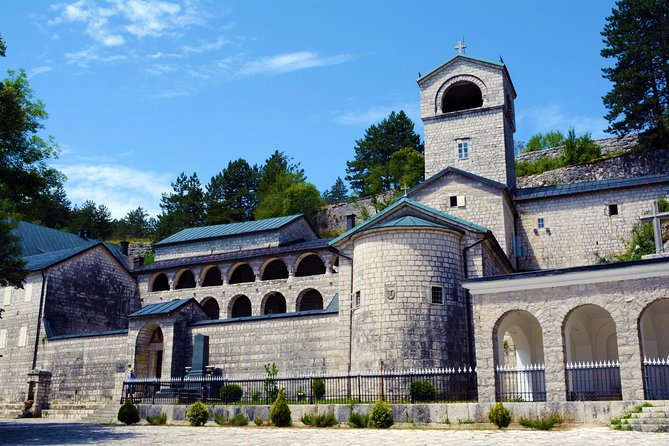
The walk begins with St. Peter of Cetinje and the Cetinje Monastery, the most important religious monument on the route. The monastery was built in 1701 and is dedicated to the Nativity of the Virgin. It is still an active religious site, so you should treat it as a place of worship rather than simply another stop for photographs.
Your guide can help explain why the monastery matters to Montenegro’s national story. Without that context, the building can seem modest compared with the grand royal residences that follow. With context, its role becomes clearer: this was a central spiritual and political point for the old capital.
The planned visit also includes Ćipuri Church, with about 10 minutes allocated to the first stop. Admission is listed as free, although that does not mean every nearby religious or museum space is included in the tour price.
Dress and behavior deserve attention here. Monastery rules must be respected, so modest clothing and a quiet manner are sensible. If you want a relaxed photo stop, the monastery may feel more limited than an ordinary outdoor monument.
Biljarda, the 10-minute window into Njegoš’s life
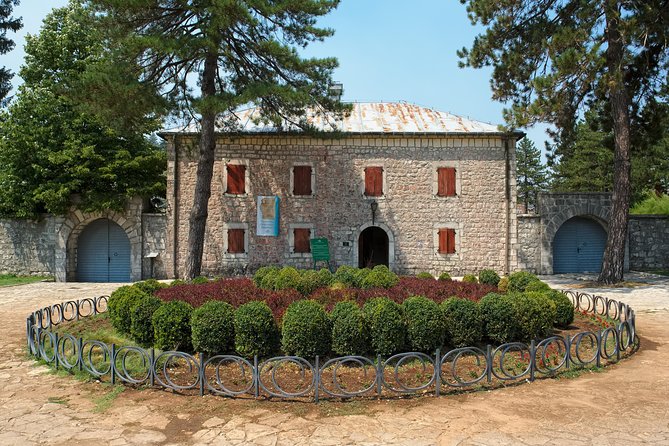
Across from the monastery area, you visit Biljarda, the former residence of Petar II Petrović Njegoš. Njegoš was both a ruler and a major Montenegrin literary figure, so this stop links the political and cultural sides of Cetinje.
The name Biljarda comes from the billiard table associated with the residence. The building is one of Cetinje’s key architectural sights, but the scheduled visit lasts only about 10 minutes. That is enough for an introduction and a guide’s explanation, not enough for a slow examination of every room or display.
Admission to Biljarda is not included. This matters because the headline price does not cover all the places you may enter. If you are deciding how much cash or card time to allow for museums, ask the guide which interiors are open and what the current admission charges are.
I see this stop as especially useful for first-time visitors who want the story behind Njegoš before moving on. If you already know his work or want to study the residence closely, you may find the timetable too brisk.
King Nikola’s Museum and the royal setting
Immediately across the street is the King Nikola’s Museum, housed in a building dating from 1867. The museum focuses on King Nikola and the royal period, giving you a look at the court that shaped Cetinje’s public image.
The visit is also scheduled for about 10 minutes, and admission is not included. That is a short window for a museum, especially if you enjoy reading labels or examining rooms carefully. The best approach is to listen for the main points, note what interests you, and return later if your schedule allows.
Indoor photography may be restricted in the palace. If taking pictures is important to you, do not assume every room permits it. A rainy-day account of the visit found the palace appealing but was disappointed that photographs were not allowed inside. That is a small issue, but it can affect how you experience a museum built around royal interiors.
The museum works well as a companion to Biljarda. One stop presents Njegoš’s residence, while the next shifts attention to King Nikola and the royal family. Together, they show how Cetinje developed from a mountain capital into a city with court buildings, foreign missions, and cultural institutions.
A few more Budva trips worth weighing up
- 1-Hour Guided Lipa Cave Adventure in Montenegro
★ 5.0 · 342 reviews - Budva Bay: Kayak & SUP Tour to Coastal Caves
★ 5.0 · 217 reviews - Bečići Standard Paragliding Montenegro /All-inclusive
★ 5.0 · 155 reviews - Tandem paragliding in Budva /All-inclusive
★ 5.0 · 86 reviews
The final walk through Cetinje’s civic center
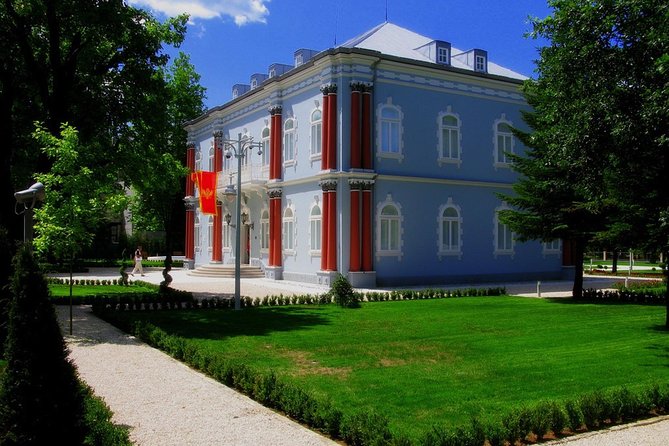
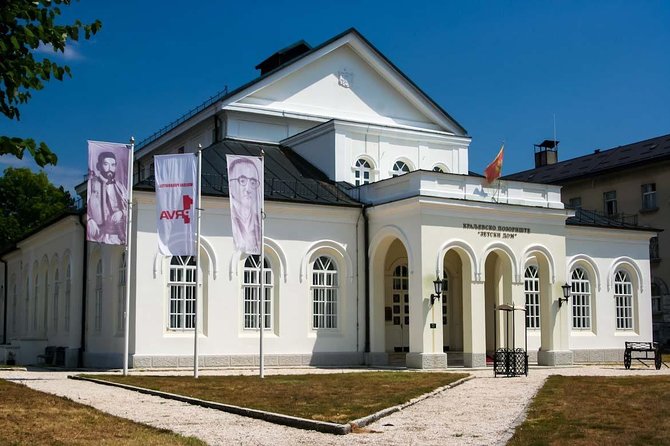
The final 30 minutes are spent outdoors in central Cetinje. You see the Presidential Palace, the Royal Theater, also called Zeta House, and the monument to Ivan Crnojević, the Zeta ruler traditionally linked with the city’s founding.
This part of the tour is less about entering buildings and more about understanding the town’s layout. You take a walk along the main street, passing the architecture and greenery that give Cetinje its character. The promenade is a pleasant counterpoint to the more formal monastery and museum stops.
The Presidential Palace helps connect historic Cetinje with modern Montenegro. The Royal Theater adds a cultural note, while the monument to Ivan Crnojević takes you back to the city’s medieval beginnings. The sequence gives the tour a reasonable shape: religion first, then Njegoš, then the royal family, and finally the wider civic center.
A guide is most useful here because the sights can otherwise blur into a pleasant but vague stroll. One well-regarded guide connected with the experience is Filip, who led an hour-long walk that helped a visitor notice far more of the city’s important details. That is exactly where a local guide earns the fee: not by making the town larger, but by making its buildings easier to read.
What one hour can and cannot cover
The planned stops add up to roughly 50 minutes: 10 minutes at the monastery and Ćipuri Church, 10 minutes at Biljarda, 10 minutes at King Nikola’s Museum, and 30 minutes in the central town. The advertised duration is about one hour.
That is enough to get your bearings and see the main highlights. It is not enough for a serious museum visit. Cetinje has additional museums, including collections connected with ethnography, national history, art, and other parts of Montenegrin life. A longer visit can include more of them, but this tour keeps the focus narrow.
I would book this as an orientation walk rather than a complete cultural program. You can use the hour to identify the museums and buildings you want to revisit independently. If your goal is to spend several hours reading exhibits, the short schedule will feel compressed.
The compact center is a real advantage. You will not spend the tour waiting for transfers between stops, and the walk gives you a direct sense of how the old capital fits together. The tradeoff is that there is little spare time if you stop for extended photos, browse slowly, or enter every available museum.
The real cost at $115.50 per person
At $115.50 per person, this is not a bargain-priced city stroll. The price includes a licensed English-speaking guide and tourist tax, but not transport from your accommodation in Budva, entrance fees, food, drinks, other personal costs, or optional travel health insurance.
The value improves if you are traveling with family or friends and can use the available group discount. Since the activity is private, your group does not share the guide with strangers. That gives you more freedom to ask questions and adjust the pace, although the short schedule still limits how much can be covered.
For a solo visitor, the price is harder to justify unless personal guiding is a high priority. For a small group interested in Montenegro’s royal and religious past, the cost can make more sense because you are paying for interpretation rather than transport or a long list of included admissions.
You should also budget for museum tickets if you want to enter Biljarda or King Nikola’s Museum. The fact that several outdoor sights are free helps, but the overall cost is not simply the advertised per-person rate.
The tour starts and finishes at Cetinje Municipality. You must arrange your own transfer from Budva or wherever you are staying. That makes the experience best suited to people who already have transport plans for Cetinje, or who are comfortable organizing that connection separately.
Weather, walking, and the town’s rough edges
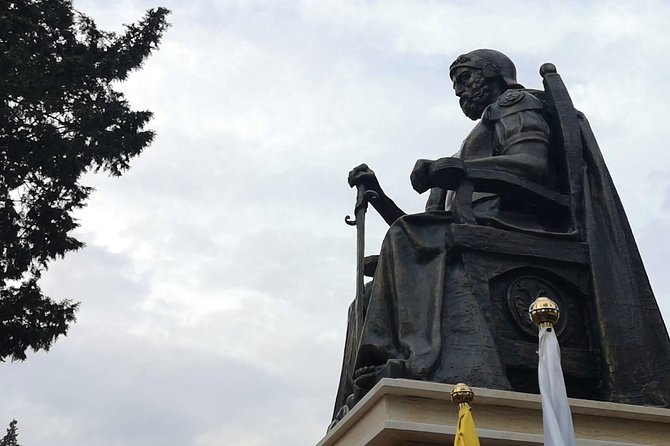
This is an outdoor walking experience, and it requires good weather. If poor weather cancels the activity, you are offered a different date or a full refund. Rain can make the old capital feel less inviting, especially during the final promenade and outdoor monument stops.
Most people can participate, and service animals are allowed. The available information does not give a detailed accessibility assessment, so you should ask the operator directly if your group needs specific assistance with walking surfaces or museum access.
Cetinje’s appearance is uneven. The main center has parks, greenery, old architecture, and broad streets, but some outer sections look run-down. I would not book this expecting a perfectly restored historic center. Book it if you want to see a real former capital, including both its dignity and its imperfections.
The monastery also has its own rules, and the royal museum may limit photography. These are not major problems, but they shape the visit. A little flexibility and respect will make the hour more pleasant.
Who will get the most from this tour
I would recommend the tour to you if:
- You are staying in or near Budva and already plan to visit Cetinje.
- You want a short introduction before exploring museums on your own.
- You prefer a private guide to a large group.
- You care about Montenegro’s royal, religious, and political past.
- You have friends or family with whom you can share the group price.
- You want an easy walking route with the major central sights in one hour.
I would think twice if you want a full museum day, need transportation included, or are traveling alone on a tight budget. You may get better value by visiting Cetinje independently and spending longer inside the museums, provided you are comfortable researching the sites beforehand.
This tour also suits people who dislike complicated sightseeing days. The route is compact, the main street is included, and the guide handles the historical connections. You will not see every collection in town, but you will leave with a clearer idea of why Cetinje matters.
Should you book the Cetinje City Tour?
Book it if you want a private, tightly focused introduction to Montenegro’s old capital and can share the $115.50 price with others. The monastery, Biljarda, King Nikola’s Museum, and central walk form a sensible first look, and a good guide can reveal details you might otherwise pass without noticing.
Skip it if you expect transportation, museum admissions, or a long visit inside each building to be included. In that case, plan more time in Cetinje and arrange the sights yourself.
My practical advice is to confirm the meeting time, transport plan, current museum fees, and photography rules before booking. Also check the weather forecast. On a clear day, the combination of history, mountain surroundings, and a leafy central walk makes this a useful stop between the coast and Montenegro’s inland sights.
FAQ
Where does the Cetinje City Tour start?
The tour starts at Cetinje Municipality in Montenegro and ends back at the same meeting point.
How long does the tour last?
The tour lasts approximately one hour.
Is transportation from Budva included?
No. Transfer from your accommodation or place of stay to Cetinje is not included.
Is the tour private?
Yes. Only your group participates in the activity.
Is an English-speaking guide included?
Yes. A licensed tourist guide in English is included.
Are entrance fees included?
No. Entrance fees for local sites and museums are not included.
What happens if bad weather cancels the tour?
If the experience is canceled because of poor weather, you are offered a different date or a full refund.
Just added around Budva
- Kotor’s serpentines, Skadar Lake & Horseshoe Bend of Montenegro★ 5.0 · 3 reviews
- Budva City Tour★ 5.0 · 3 reviews
- Private Tour: Montenegro Day Trip from Dubrovnik★ 5.0 · 3 reviews
- Private Transfer from Budva to Podgorica Airport and city★ 5.0 · 4 reviews
- Paragliding in Budva with Certified Pilot (Free Pick-Up Included)★ 5.0 · 6 reviews
- Krapina Canyoning Adventure – Budva★ 5.0 · 6 reviews
- Canyoning Budva Drenovstica★ 5.0 · 6 reviews
- Budva 1 hour Private walking tour★ 5.0 · 7 reviews
Lovćen & Cetinje Tours, compared.
Great Montenegro Tour-Lovcen NP,Mausoleum Lovcen,River of Crnojevic,Sveti Stefan
Read our review →
GREAT MONTENEGRO TOUR Cetinje – Njeguši – Kotor – Budva – Bečići – Saint Stefan
Read our review →
Private National Park Lovcen with food and wine tasting
Read our review →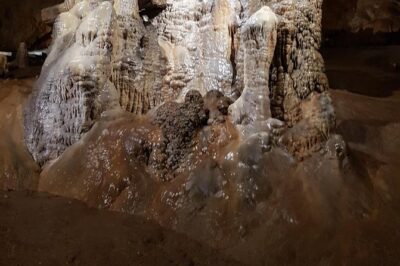
National Park Lovcen and Lipa Cave (Private tour)
Read our review →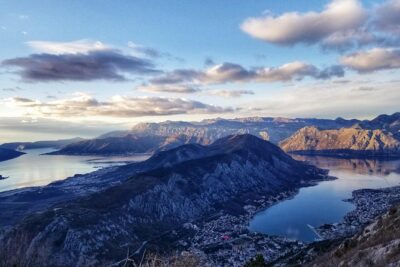
National parks and wine tasting (NP Lovcen, NP Skadar lake, Cetinje, Njegusi)
Read our review →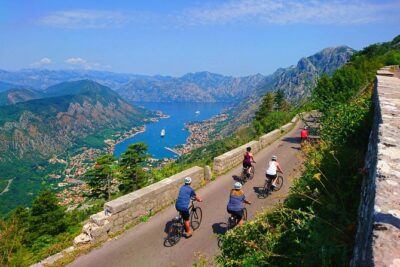
Cable car + Electric MTB from Njegos Mausoleum to Kotor bay
Read our review →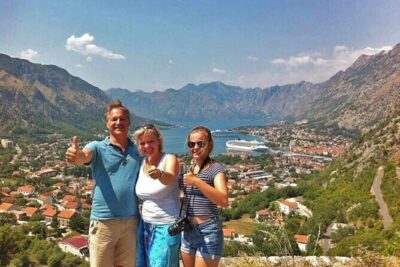
Lovcen – Symbol of Montenegrin Freedom including Budva & Cetinje
Read our review →
Wine tasting and magical tour from Kotor, Budva, Tivat (Lovcen,Skadar lake)
Read our review →Browse the lists this tour appears in