
Reviewed · WALKING TOURS
Olive oil farm to fork experience & short walking tour of Kotor
Kotor tastes better beyond the city walls. This five-hour private outing pairs a short walk through Kotor with a visit to the Lustica region, where olive growing and oil making have shaped local life for more than 2,000 years. You’ll meet a family that has owned its farm for 200 years, see an old stone mill, learn about modern oil production, and sit down to homemade food with a view.
I like the personal scale of this tour, since only your group of up to six takes part. I also like the mix of Kotor history and rural food culture, rather than spending the whole morning in town. The main drawback is the price: $863.54 per group is a serious outlay for one day, though it becomes much more reasonable when six people share it.
The guides Daniel and Lisette receive especially strong praise for their friendly, humorous approach. Daniel handles the drive to the farm, while Lisette has been praised for making the Kotor walk lively and easy to follow. If you want a relaxed outing with conversation, food, and local contact, this is a strong choice.
In This Review
- Key points at a glance
- Starting with Kotor’s Old Town
- Driving toward the Lustica olive country
- Walking through a 200-year family estate
- Seeing the old 150-year-old olive mill
- Understanding the modern anaerobic press
- Learning to taste olive oil
- Sitting down to a homemade Montenegrin spread
- Meeting Ilija and hearing about farm life
- Is $863.54 good value for your group?
- Timing, accessibility, and planning details
- Who should book this Kotor outing?
- Should you book it?
- FAQ
- Where does the tour start and finish?
- Is pickup available in Kotor?
- How long does the experience last?
- How many people can join the private tour?
- What language is the tour offered in?
- What food and drinks are included?
- Can I cancel for a full refund?
Key points at a glance
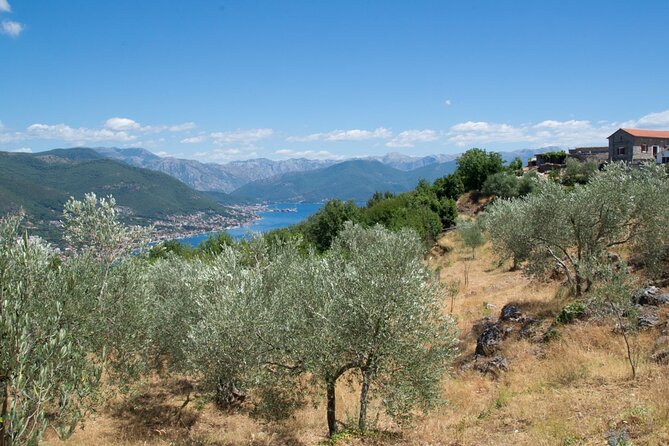
- A 200-year family estate: Walk among nearly 1,000 olive trees on land held by the same family for two centuries.
- Two ways to make olive oil: See an authentic 150-year-old mill, then learn how the newer anaerobic press changed the family’s daily work.
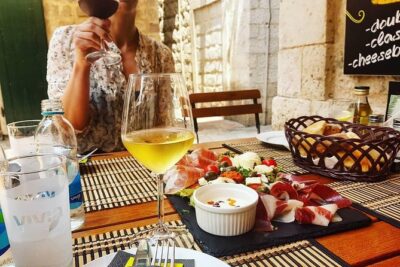
- A generous local tasting: Expect olive oil, bread, cheese, prosciutto, olives, salad, smoked meats, sausages, and apple pie, with drinks included in the food stop.
- Kotor and the countryside in one morning: Start with a short Old Town walk, then leave the stone lanes for the Lustica olive groves.
- A private outing for up to six: Your own group sets the social rhythm, which suits families and friends who prefer a quieter day.
- A practical pickup option: You can arrange pickup in Kotor, including the Old Town or port, where the guide will hold a sign with your name.
Starting with Kotor’s Old Town

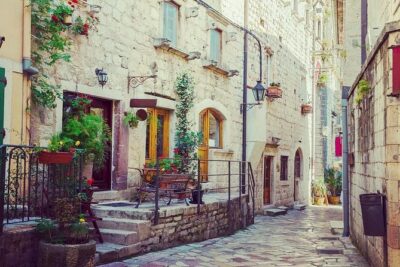
The tour begins in Kotor, with a short walking tour before the drive to the farm. This is not a full city sightseeing program, so think of it as a useful introduction rather than a complete study of every church, square, and fortification.
That shorter format works well if you are visiting Kotor for the first time and want to get your bearings before heading into the countryside. Daniel and Lisette have been praised for making the walk both informative and lighthearted, an important quality in a compact tour where too much formal commentary could slow the morning.
You’ll hear about Kotor and its past while moving through the old streets. The exact route is not specified, so you should not book this expecting a set list of monuments or a long historical lecture. The value lies in the guide’s local perspective and the easy transition from town to farm.
Pickup is offered, and if you meet in Kotor Old Town or at the port, the guide will hold a sign with your name. That is especially useful at the port, where several tour operators may be waiting at the same time. The tour ends back at the meeting point, keeping the day simple for anyone with onward plans in Kotor.
A few more Kotor trips worth weighing up
- Mussel & Oyster Farm with Perast visitation Private Tour
★ 5.0 · 5 reviews
Driving toward the Lustica olive country
After the city walk, Daniel drives you toward the Lustica region. The change of setting is one of the best parts of the outing. Kotor gives you stone lanes and centuries of urban history, while Lustica offers working farmland, old trees, and a closer look at food production.
Olives have been cultivated in this part of Montenegro for more than 2,000 years. That long tradition matters because the farm visit is not just a tasting stop with a few decorative trees. The olive grove is part of a continuing way of life, and the family still grows vegetables and keeps animals on the estate.
The drive also gives you time to ask questions. Previous praise for Daniel focuses on his insight into Kotor and the surrounding area, so use the journey for more than simple transportation. Ask about local food, the olive business, and daily life in the region. The conversation is likely to be as valuable as the formal explanation at the farm.
Walking through a 200-year family estate
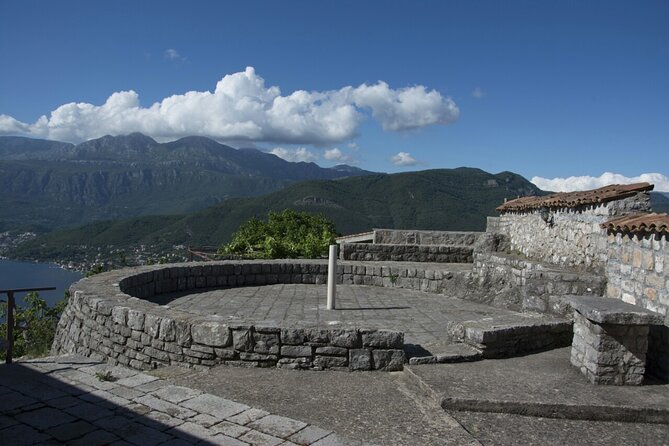
At the farm, you meet the family and walk through an estate they have owned for 200 years. Nearly 1,000 olive trees grow here, with many of them centuries old. You can expect a setting that feels lived in and productive, not arranged only for a tour.
The age of the trees gives the visit its character. A young plantation can explain olive farming, but old trees make the connection to the past visible. As you walk among them, you’ll see how agriculture, family ownership, and local cooking fit together over generations.
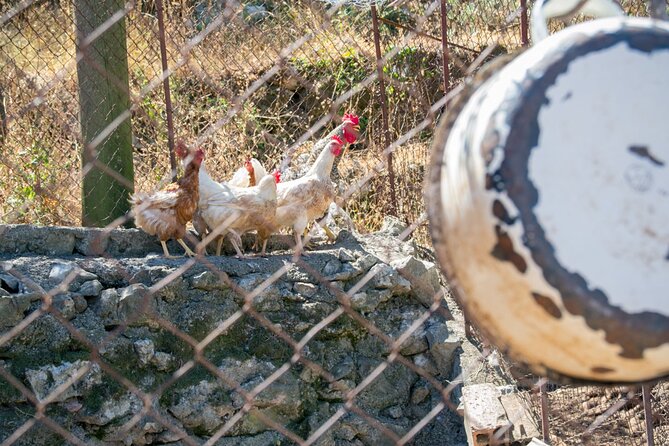
The family also produces vegetables and keeps animals on the property. That detail helps explain the meal later. The food is not presented as a separate restaurant course. It comes from a household that still works with the land, and that gives the farm-to-fork idea some substance.
You should keep your expectations practical. This is not described as a strenuous hike or a formal agricultural class. It is a guided estate visit, with time to walk, listen, taste, and chat. If you prefer polished museum displays, the farm may feel informal. If you enjoy seeing how a family actually lives and works, that informality is the point.
Seeing the old 150-year-old olive mill
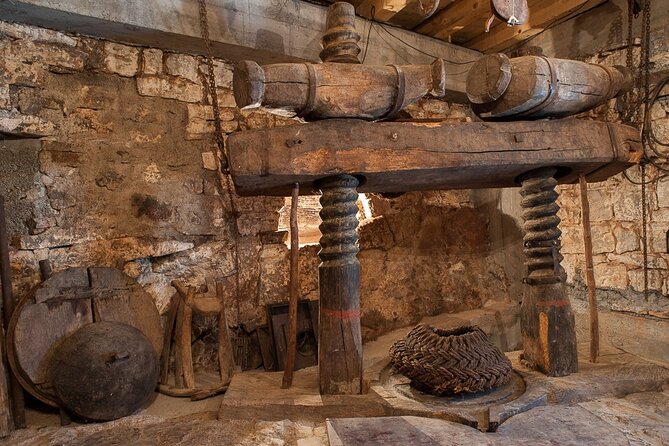
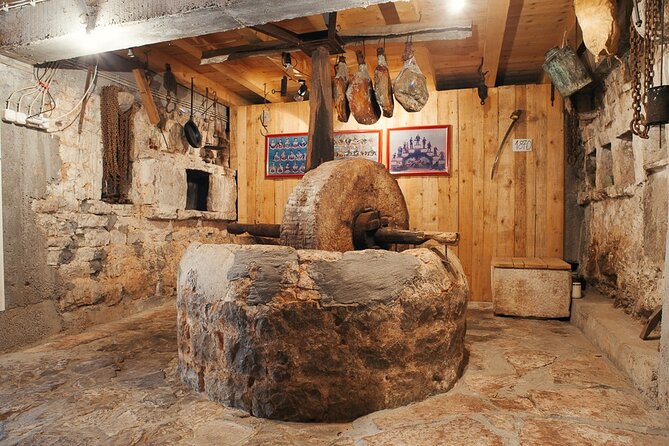
One of the most distinctive parts of the visit is the authentic 150-year-old olive mill. You’ll learn how olive oil was produced in the old way and see the equipment that once formed the center of farm life.
The mill adds context to the tasting. Instead of hearing only that olive oil is important in Montenegro, you see the tools and methods that made production possible before modern machinery. It also helps you understand the labor involved in turning harvested olives into a food used at nearly every table.
The old mill is a strong reason to choose this outing over a basic oil tasting. You are not simply sampling a finished product. You are following the process from grove to mill and then to the table.
Still, the information provided does not promise a full demonstration with every stage performed during your visit. The safest expectation is a guided explanation and a look at the historic mill. Your enjoyment will depend partly on how much you like asking questions and examining the details.
More walking tours:
- Kotor Old Town Walking Tour
★ 5.0 · 357 reviews - Private Walking tour with Wine and Food
★ 5.0 · 197 reviews - Kotor Old Town Small-Group Walking Tour
★ 4.5 · 148 reviews - Private Kotor Old Town Walking Tour
★ 5.0 · 64 reviews
Understanding the modern anaerobic press
The farm also uses a new olive press with anaerobic production. The guide explains how this newer method differs from the old system and how it changed the family’s lifestyle.
This comparison gives the visit unusual depth. Many food tours present tradition as if modern tools have no place in it. Here, you see both sides: the 150-year-old mill carries the memory of earlier work, while the modern press makes production different and presumably more manageable for the family.
The point is not simply that newer equipment is faster. You’ll hear how the change affected the household and the oil business. That personal angle makes the technology easier to understand. It connects equipment to real decisions about work, time, and family life.
If you are curious about food production, this may be the most informative part of the tour. If you mainly want scenery and lunch, the explanation is still brief enough to keep the morning moving. The private format helps here because you can ask for more detail without holding up a large group.
Learning to taste olive oil
After the production visit, you taste the oil and learn to notice differences in quality and character. This is a useful skill, since many people use olive oil daily but have never been shown what to look for in a tasting.
The tasting gives you a reason to pay attention to aroma, flavor, and finish instead of treating oil as a background ingredient. You’ll have the chance to compare what you have learned about the grove and the presses with what reaches your glass or plate.
The setting also matters. Tasting oil at the farm where it is produced makes the food feel connected to place. You have just seen the trees, the old mill, and the current press. Then you taste the result with the family nearby to explain it.
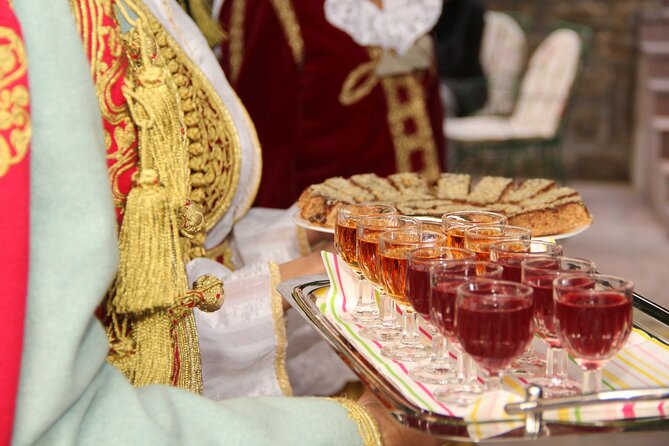
The provided menu lists organic olive oil, homemade bread, cheese, prosciutto, and olives as tasting items. A welcome drink is also included, with homemade cherry or grape brandy listed as an option. Since the tour is offered in English, you can expect the explanations and conversation to be conducted in English.
Sitting down to a homemade Montenegrin spread
The food stop is more than a small sample. The menu includes homemade smoked ham, bacon, sausages, homemade cheese, salad, and apple pie, along with bread, olives, and prosciutto. Wine and other local drinks are also described in the visit, while the sample menu specifically lists a welcome drink and homemade brandy.
This is the kind of meal that gives you a better sense of local food than a carefully plated restaurant course. You’ll taste preserved meats, dairy, bread, olive oil, and simple produce in the setting where the food belongs. The meal is described as light in one account, but the full list is substantial enough to serve as a satisfying break.
The family hosts the meal at the estate, where you can rest and take in the scenery. You’ll also have time to talk with Ilija, the man behind the estate and its oil business. His presence is important because it turns the visit into a personal exchange rather than a scripted stop.
Expect a warm, informal table rather than a formal dining room. That may be a plus if you like food served with conversation and local stories. It may be less appealing if you need a precise menu, formal service, or a choice of many dishes. The available menu gives you a clear idea of the food, but it does not list substitutes for dietary restrictions.
Meeting Ilija and hearing about farm life
The conversation with Ilija is one of the strongest reasons to make time for this trip. You can ask about the estate, the oil business, the old mill, and what life is like in the area.
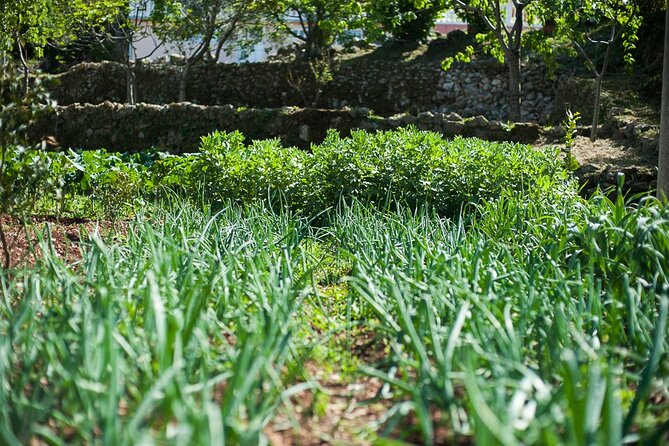
The family’s work extends beyond olive oil. Vegetables and animals are part of the estate, so you get a broader picture of rural life. That makes the visit feel less like a single-product promotion and more like a look at a working household.
I especially like this human side of the outing. You can learn a great deal from a machine or a tasting, but a conversation explains why the family kept the old mill, adopted a modern press, and continued farming the property. Those details give the day its strongest sense of place.
Is $863.54 good value for your group?
The listed price is $863.54 for a private group of up to six people. That works out to about $144 per person if six people join, before any separate personal spending. For two people, the effective cost is about $432 per person, so group size makes a major difference.
At full capacity, the price can be fair for a five-hour private outing that includes transportation, guiding in Kotor, the farm visit, olive oil education, tasting, and a large homemade meal. You are paying for a personal vehicle and host-led access, not simply admission to an olive grove.
The value is weaker for one or two people who mainly want a short city walk and a basic tasting. In that case, the private format and included meal may not offset the high total price. I would consider it most worthwhile for a family or group of friends who can share the cost and appreciate food, conversation, and countryside time.
The tour has five-star feedback across five ratings, with the strongest praise focused on Daniel and Lisette, the family welcome, the food, and the unusual olive-making lesson. That positive record supports the price, though the small number of ratings means you should still judge the tour by your own priorities.
Timing, accessibility, and planning details
The outing lasts about five hours and is offered Monday through Sunday from 9:00 a.m. to 2:00 p.m. for the stated operating period of October 4, 2025 through July 7, 2026. The schedule suits a morning start, followed by lunch and a return to Kotor in the early afternoon.
Pickup is offered, and the activity ends back at the meeting point. Confirmation is received at booking. Service animals are allowed, and most people can participate, though the information does not give detailed notes about terrain, vehicle access, or dietary accommodations.
This is a private activity, so only your group takes part. You can cancel for a full refund up to 24 hours before the start time. Changes or cancellations inside that window are not accepted for a refund, and the operator may offer another date or a full refund if the minimum number required for the tour is not met.
Who should book this Kotor outing?
I would choose this tour if you want to combine Kotor’s old town with a genuine food experience outside the city. It suits people who enjoy meeting local families, asking questions, tasting regional products, and seeing both traditional and modern production.
It is also a good fit for a small family or group of friends. The private vehicle, flexible conversation, and shared meal are easier to justify when the price is divided among six people.
I would think twice if you want a long, detailed walking tour of Kotor, a strenuous countryside walk, or a formal restaurant meal. The city portion is short, and the farm setting is personal and informal. You should also check the total cost carefully if your group is small.
Should you book it?
Book this outing if the idea of tasting olive oil where it is made sounds better than another standard city tour. The old mill, newer anaerobic press, centuries-old trees, and homemade meal give the day a clear purpose.
I would especially recommend it for a full group of up to six, when the cost becomes easier to defend. Daniel and Lisette’s friendly guiding, the family welcome, and the chance to speak with Ilija add the personal touch that makes this more than a transport-and-tasting package.
FAQ
Where does the tour start and finish?
The tour starts in Kotor, Montenegro, and ends back at the meeting point in Kotor.
Is pickup available in Kotor?
Yes. Pickup is offered. At Kotor Old Town or the port, the guide will hold a sign with your name.
How long does the experience last?
The tour lasts approximately five hours.
How many people can join the private tour?
The price covers a private group of up to six people. Only your group participates.
What language is the tour offered in?
The experience is offered in English.
What food and drinks are included?
The listed food includes olive oil, homemade bread, cheese, prosciutto, olives, smoked ham, bacon, sausages, salad, and apple pie. A welcome drink and homemade cherry or grape brandy are also listed, along with local drinks such as wine.
Can I cancel for a full refund?
Yes. You can cancel at least 24 hours before the start time for a full refund. Cancellations or changes made less than 24 hours before the start time are not accepted for a refund.
Just added around Kotor
- Wild Beauty of Montenegro – Private Tour★ 5.0 · 3 reviews
- Special Montenegro: Lipa cave – Njegoš’s Mausoleum – Njeguši village – Cetinje★ 5.0 · 3 reviews
- Blue Cave Adventure & Beach Time★ 5.0 · 3 reviews
- Transfer Portonovi / Herceg Novi to Dubrovnik Old Town★ 5.0 · 3 reviews
- Hiking Vrmac peninsula with panoramic view on Kotor bay★ 5.0 · 3 reviews
- Luxury Perast and Njegusi Village Tour★ 5.0 · 3 reviews
- Our Lady of the Rocks two hours private tour★ 5.0 · 3 reviews
- Kotor walking tour and Jaz beach – private tour★ 5.0 · 3 reviews
Walking Tours, compared.


Private Kotor Walking Tour – Rick Steves Recommended
Read our review →
Great tour of coastal monasteries in Budva – Walking on the path of history!
Read our review →
Food, wine and the best private walking tour of Kotor
Read our review →
Browse the lists this tour appears in