

Reviewed · OLD TOWN WALKING TOURS
Private Kotor Old Town Walking Tour
Kotor’s mountains make a dramatic first impression. This private 90-minute walk gives you a clear introduction to the UNESCO-listed Old Town, with its Venetian lanes, grand squares, churches, fountains, and steep mountain walls. I like the personal pace and the useful local orientation, especially since the guide can point you toward places to visit after the tour. The route also includes Kotor’s key sights without asking you to spend half a day on your feet.
The main consideration is the minimum booking of four people. At $72.10 per person, the price can make sense for a family or small group, but it is less attractive if you are traveling alone or as a couple and must cover four places. Hotel pickup is available only within Old Town Kotor, and the tour ends in Arms Square rather than returning you to your hotel.
In This Review
- Key points to know before booking
- Why a private walk works well in Kotor
- Starting at the Old Town gates or your hotel
- Arms Square and Kotor’s first bearings
- The Riva and the mountains above Kotor
- Flour Square and Kotor’s grand palaces
- St. Tryphon Cathedral and the heart of the tour
- Maritime Museum Square and the Brotherhood of the Seamen
- Karampana Fountain and Greek Square
- Finishing in Arms Square with a useful map
- Price, group size, and overall value
- Who should book this Kotor walk?
- Should you book the Private Kotor Old Town Walking Tour?
- FAQ
- How long does the Private Kotor Old Town Walking Tour last?
- Where does the tour begin?
- Where does the tour finish?
- Is hotel pickup included?
- What sights are visited?
- How many people are needed to book?
- Can I cancel for a full refund?
Key points to know before booking
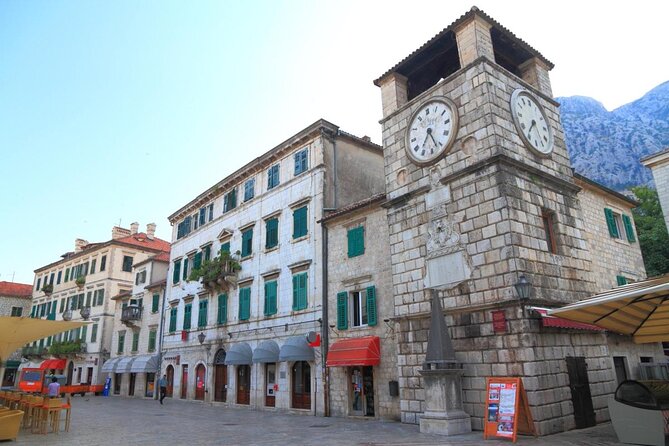
- A compact route through Kotor’s maze: You cover Arms Square, Flour Square, St. Tryphon Cathedral, Maritime Museum Square, Greek Square, and the Karampana Fountain.
- Private means your group sets the pace: Only your party takes part, giving you a better chance to ask questions and request practical advice.
- The mountain views are part of the experience: Walking along the Riva gives you a striking look at the steep peaks above town.
- A useful first-day orientation: The guide explains Kotor’s past and can suggest places to visit, including local gelato shops.
- Pickup is simple in Old Town: Meet at your Old Town hotel, the port area in Old Town, or the main gates.
- Four people are required: This is the most important booking condition when comparing the cost with a regular group tour.
Why a private walk works well in Kotor
Kotor Old Town is small, but it is not easy to read at first glance. Its narrow streets turn sharply, small squares appear without warning, and important buildings can look tucked away behind plain walls. A guide gives those spaces a storyline instead of leaving you to wander past them without context.
I like the private format here because the tour lasts only about an hour and a half. That is long enough to cover the main sights, but short enough to fit around a cruise-day schedule, a longer afternoon meal, or a visit to the town walls. You are not committing to a full-day program when what you really need is a strong first look.
The private setup also helps if your group has different interests. You can ask about local customs, architecture, churches, maritime traditions, or where to go next. One guide even used the end of the walk to suggest good gelato shops and other corners worth finding, which is exactly the sort of advice that makes a short orientation more useful.
The tradeoff is that this is an introduction, not a slow architectural study. You will see several important places, but the schedule does not suggest long interior visits or extended time at every stop. If you want deep museum time, a detailed religious art tour, or a long climb above town, you will need to plan that separately.
More old town walks:
- Kotor Fast-Track: Perast Old Town & Our Lady of the Rocks
★ 5.0 · 411 reviews - Kotor Old Town Walking Tour
★ 5.0 · 357 reviews - Kotor Old Town Small-Group Walking Tour
★ 4.5 · 148 reviews
Starting at the Old Town gates or your hotel
You can begin at a selected time by meeting your guide at the main gates of Old Town Kotor or at your hotel in Old Town. Pickup is also listed for the port area within Old Town, so the arrangement is fairly easy if you are staying inside the historic center or arriving by ship.
The meeting point matters because Kotor’s old center is compact and largely pedestrian in character. A clear starting point saves you from searching for an office or trying to find a vehicle in streets that are better suited to walking. If you are staying outside Old Town, do not assume hotel pickup is included. The provided pickup applies to hotels in Old Town Kotor.
From the start, the guide introduces you to Kotor as a UNESCO World Heritage Site. That designation is not just a label for the brochure. It helps explain why the town feels so carefully preserved, with its old squares, stone buildings, churches, palaces, and defensive setting still working together as one historic center.
Bring comfortable shoes. The route uses small streets and public squares, and the stone paving can be uneven. The tour is short enough for most people, and the information provided says most participants can take part, but you should still expect a steady walk rather than a seated sightseeing trip.
Arms Square and Kotor’s first bearings
The walk begins around Arms Square, also called Trg od Oružja. This is one of the best places to get your bearings because the square gathers several visual clues about Kotor’s past. The clock tower is here, and the open space gives you a clearer sense of how the narrow lanes connect.
Starting at Arms Square also makes practical sense. You begin with a recognizable public space, then move into the smaller streets where a guide is most useful. The route later returns here, so you finish in a place that is easy to recognize.
I would pay close attention to the orientation at this point. Kotor can be confusing on your first walk, and knowing the location of the clock tower helps you navigate independently afterward. The map included with the tour adds value here. It gives you something simple to consult when you return on your own for lunch, shopping, or another walk.
The square can also feel more open and exposed than the lanes that follow. That contrast is part of the pleasure of Kotor. You move from a broad civic space into passages where the buildings almost press in around you, then emerge into another square with a different mood.
The Riva and the mountains above Kotor
The route takes you along the Riva, where the town opens toward the surrounding mountains. This is one of the most memorable parts of the walk because the peaks rise sharply behind Kotor. The view gives immediate context to the town’s location and helps explain its defensive importance over the centuries.
I like that the tour does not treat Kotor as a collection of old buildings only. The setting matters just as much. The mountains are not a distant backdrop. They tower above the town and make the streets feel protected, enclosed, and dramatically placed.
This stop is also a good reminder that the tour is more than a checklist. You are not simply moving from church to fountain. The guide connects the town’s buildings with its position on the coast and its long relationship with the sea. That larger picture makes the later references to seamen and maritime life easier to understand.
Do not expect a separate mountain excursion here. The tour offers views from the town, not a hike into the surrounding peaks. If you want a higher lookout, you will need another activity and more time. For a short Old Town introduction, though, the Riva provides a strong visual pause.
More walking tours:
- Private Walking tour with Wine and Food
★ 5.0 · 197 reviews - Private Kotor Old Town Walking Tour
★ 5.0 · 64 reviews - Private Kotor Walking Tour – Rick Steves Recommended
★ 5.0 · 63 reviews - Food, wine and the best private walking tour of Kotor
★ 5.0 · 31 reviews
Flour Square and Kotor’s grand palaces
Next comes Flour Square, known for its important palaces. The square offers a change from the practical, public feel of Arms Square. Here, the buildings point to the wealth and influence of families who shaped Kotor’s civic life.
A guide is particularly helpful in a place like this. Palaces can look like attractive old façades when you do not know who built them or why they matter. The tour’s focus on the town’s past centuries gives these buildings a place in the larger story of Kotor’s former glory.
The square also shows how much variety fits into a very small area. Within a short walk, you see a clock tower, palaces, religious buildings, maritime references, and water infrastructure. That compact mix is one of Kotor’s great strengths. You spend less time commuting between sights and more time looking at the town itself.
Because the tour is timed at about 90 minutes, your stop here will likely be an explanation and exterior viewing rather than a long palace visit. That is worth knowing if historic interiors are your main interest. The value is in understanding the square’s role and seeing how it fits into the route.
St. Tryphon Cathedral and the heart of the tour
St. Tryphon Cathedral is described as the biggest attraction in Old Town, and it is the central sight on this walk. Dating to the 12th century, the cathedral gives the tour one of its clearest connections to Kotor’s medieval past.
This is the place where the scale of Kotor’s history becomes easier to grasp. The old town is intimate, but the cathedral signals that this was not merely a small settlement. It was a significant religious and civic center with the resources to build and maintain an important church.
Your guide’s explanation matters here. Without context, you may notice the age and architecture but miss the cathedral’s role in the city. With a local guide, you can ask questions and get a more focused account of why this building is central to Kotor.
The supplied information does not promise an extended interior visit, entry fees, or a special religious-art presentation. I would treat the cathedral as a major exterior and historical stop, while confirming any current entrance arrangements if seeing the inside is essential to you.
The cathedral also acts as a useful midpoint in the route. By this stage, you have seen the town’s public square, waterfront setting, palaces, and major church. The remaining stops add more specialized details about maritime life, fountains, and Orthodox churches.
Maritime Museum Square and the Brotherhood of the Seamen
At Maritime Museum Square, the guide introduces the Brotherhood of the Seamen of Boka. This detail gives the walk a strong local connection. Kotor’s identity was shaped by the Bay of Kotor and by people whose lives depended on the sea, so the maritime story belongs beside the churches and palaces.
The square helps you see the old town as a working place, not just a preserved monument. Religious groups, seafarers, merchants, and civic families all left marks on the center. That mixture gives the route more substance than a simple parade of attractive façades.
If maritime history interests you, use this stop to ask questions. The tour is private, so you do not have to wait for a large group to move along before you finish a conversation. The guide can also help connect this square with the wider story of Boka, using the town’s buildings as clues.
Again, the tour description does not promise admission to the Maritime Museum itself. You should see this stop as a square-based explanation. If you want museum galleries and exhibits, plan that visit separately after the walk.
Karampana Fountain and Greek Square
The route continues to Greek Square, where you see the old Karampana Fountain. This is a smaller sight than the cathedral, but it adds a useful piece of everyday urban history. A fountain tells you about practical life in the old town, not only grand institutions and noble buildings.
Greek Square is also identified as the location of Kotor’s only two Orthodox churches. That makes the stop valuable for understanding the town’s religious variety. Within a few minutes, the route moves from the cathedral associated with Catholic tradition to a square marked by Orthodox places of worship.
I like this part of the walk because it broadens the picture. Kotor’s story is not one simple line. Its streets reflect different religious, maritime, and civic traditions, all pressed into a remarkably small space. The fountain and Orthodox churches help bring that variety into view.
The old Karampana Fountain is also the kind of detail you might easily miss alone. It does not dominate the square in the way a cathedral does, so a guide’s pointing it out makes a difference. The experience teaches you to notice the practical objects that helped an old city function.
Finishing in Arms Square with a useful map
The walk ends back in Arms Square after roughly an hour and a half. That is a practical finish because you are not left at an unfamiliar edge of town, and the square is a convenient place to continue exploring on your own.
The included map is useful at this stage. You can use it to retrace the route, locate places you want to revisit, or plan your next stop. The guide may also offer suggestions for what to do afterward. Advice about local gelato shops was specifically praised, and that is the sort of small recommendation that can improve the rest of your afternoon.
There is no hotel drop-off. That is not a serious problem if you are already staying in or visiting Old Town, but it is worth remembering if you expect door-to-door service. The tour is a walking orientation, not a private transfer.
I would schedule it early in your stay if possible. The route is designed to introduce you to the town, and the map and local suggestions become more useful when you still have time to act on them.
Price, group size, and overall value
At $72.10 per person, this is not the cheapest way to look around Kotor. The price includes a private local guide, Old Town hotel pickup, the map, and all taxes, fees, and handling charges. Food, drinks, souvenir photos, and hotel drop-off are not included.
The minimum of four people changes the value calculation. For four people, the total comes to about $288.40 before any group discount. That can be reasonable for a family or group that wants a private explanation rather than a large scheduled walk. You are paying for control, personal questions, and a guide focused only on your party.
For one or two people, the price is harder to justify unless you can join with other members of your own party and meet the four-person minimum. Ask about the stated group discounts before booking, since they may improve the total for a larger group.
The public rating is 4.9 out of 5 from seven ratings, with praise focused on the guide’s historical explanations, friendly manner, practical suggestions, and ability to make the tour feel personal. One guide gave up a Sunday for the walk, and the small group setting made that visit feel especially relaxed.
That positive pattern tells you what this tour does best: it provides a warm introduction and helps you understand what you are seeing. It does not promise a large number of paid interior attractions or a full-day program, so compare it with your priorities before paying the private-tour price.
Who should book this Kotor walk?
I would choose this tour if you are visiting Kotor for the first time and want quick orientation without joining a large group. It suits families, friends, cruise passengers, and anyone who prefers to ask questions as they go.
It is also a good fit if you value local recommendations. The guide can help you decide where to return, what sights deserve more time, and where to find a good gelato stop. Those details may sound small, but they can save you from spending the rest of your visit wandering without a plan.
The tour is less suitable if you want a long museum visit, extensive church interiors, or a climb into the mountains. It is also a poor match for solo visitors if the four-person minimum makes the cost too high.
Free cancellation is available when you cancel at least 24 hours before the start time. Changes or cancellations made within 24 hours are not accepted for a refund, and local time controls the deadline.
Should you book the Private Kotor Old Town Walking Tour?
Book it if you have four or more people and want a private, focused introduction to Kotor’s historic center. The short route covers the essential squares and buildings, adds mountain views, and finishes with practical advice for the rest of your visit.
Skip it if you mainly want independent wandering or plan to spend your budget on museum admissions and longer excursions. For the right group, though, the combination of a compact route, a local guide, and a personal pace makes this a useful first step into Kotor.
FAQ
How long does the Private Kotor Old Town Walking Tour last?
The tour lasts approximately 1 hour and 30 minutes.
Where does the tour begin?
You meet your guide at your hotel or port in Old Town Kotor, or in front of the Old Town main gates.
Where does the tour finish?
The walk concludes in Arms Square.
Is hotel pickup included?
Hotel pickup is included for hotels in Old Town Kotor. Hotel drop-off is not included.
What sights are visited?
The route includes the Riva, Arms Square, the clock tower, Flour Square, St. Tryphon Cathedral, Maritime Museum Square, Greek Square, the Karampana Fountain, and views of the surrounding mountains.
How many people are needed to book?
A minimum of four people per booking is required. The tour is private, so only your group participates.
Can I cancel for a full refund?
Yes. You can cancel at least 24 hours before the experience begins for a full refund. Cancellations or changes made less than 24 hours before the start time are not accepted for a refund.
Just added around Kotor
- Special Montenegro: Lipa cave – Njegoš’s Mausoleum – Njeguši village – Cetinje★ 5.0 · 3 reviews
- Wild Beauty of Montenegro – Private Tour★ 5.0 · 3 reviews
- Transfer Portonovi / Herceg Novi to Dubrovnik Old Town★ 5.0 · 3 reviews
- Hiking Vrmac peninsula with panoramic view on Kotor bay★ 5.0 · 3 reviews
- Blue Cave Adventure & Beach Time★ 5.0 · 3 reviews
- Luxury Perast and Njegusi Village Tour★ 5.0 · 3 reviews
- Our Lady of the Rocks two hours private tour★ 5.0 · 3 reviews
- Kotor walking tour and Jaz beach – private tour★ 5.0 · 3 reviews
Old Town Walking Tours, compared.
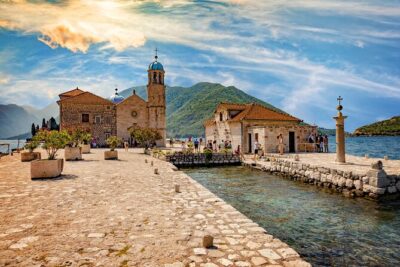
Kotor Fast-Track: Perast Old Town & Our Lady of the Rocks
Read our review →
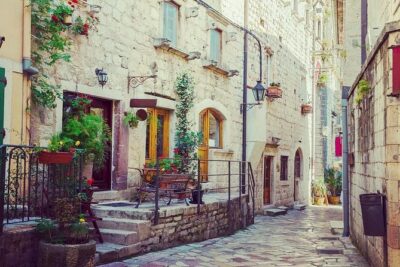


Kotor private cooking class with lunch and Old town guided tour
Read our review →
Lady of the Rocks & Perast Old Town Private Tour (up to 5 people)
Read our review →
Cable Car Lovcen & Kotor Old Town / W Local Licensed Guide
Read our review →
Private Speedboat Tour to Lady of the Rocks and Perast Old Town
Read our review →Browse the lists this tour appears in